What Is Digital Marketing in Today’s Era and How Artificial Intelligence Tools Are Creating Impact
Digital marketing in today’s era is no longer just about posting on social media or running ads. It has become a data-driven, technology-powered, customer-focused ecosystem where businesses reach the right audience at the right time with the right message. With the rapid growth of artificial intelligence tools, digital marketing is transforming faster than ever before. Businesses that adapt to AI-driven marketing are growing faster, reducing costs, and improving customer engagement significantly.
What Is Digital Marketing in Today’s Era?
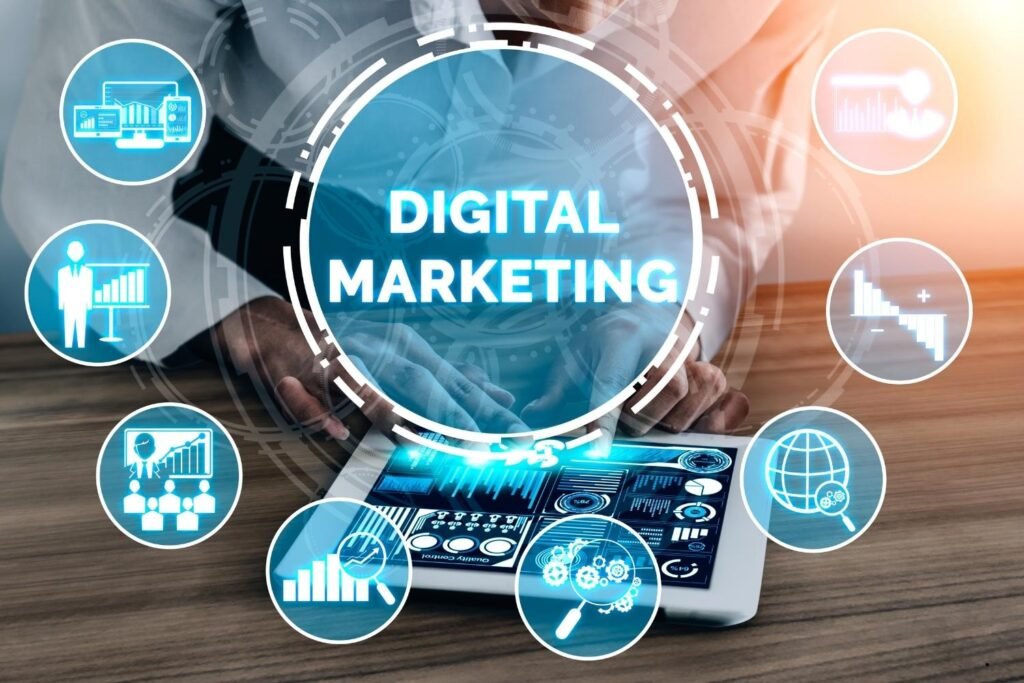
Digital marketing in today’s era has evolved far beyond basic online advertising and social media posting. It has become a complete ecosystem where businesses use digital platforms, data, automation, and technology to reach their target audience, build relationships, and increase sales. Today, most customers spend a significant amount of time online, whether on search engines, social media platforms, websites, or mobile apps. Because of this shift in consumer behavior, businesses are investing heavily in digital marketing rather than traditional marketing methods like newspapers, television, or radio. Digital marketing now focuses on understanding customer behavior, analyzing data, creating personalized experiences, and optimizing marketing strategies for better results.
Digital marketing includes multiple channels such as search engine optimization, social media marketing, content marketing, email marketing, influencer marketing, affiliate marketing, and paid advertising. Platforms like Google, Meta Platforms, Instagram, YouTube, and LinkedIn have become major marketing platforms where businesses promote their products and services. Companies use these platforms to run targeted advertisements, share content, engage with customers, and build their brand presence. Unlike traditional marketing, digital marketing allows businesses to track everything, including user behavior, clicks, conversions, engagement, and return on investment, which makes marketing more measurable and effective.
One of the biggest changes in digital marketing today is the shift from mass marketing to targeted and personalized marketing. Earlier, companies used to show advertisements to everyone, but now ads are shown only to people who are interested in a particular product or service. This is possible because digital platforms collect user data such as search history, website visits, interests, location, and online behavior. Based on this data, businesses can target the right audience with the right message. This increases the chances of conversions and reduces advertising costs. Retargeting is also an important part of digital marketing today, where users who visited a website but did not purchase are shown ads again to bring them back and complete the purchase.
Artificial Intelligence is now playing a major role in transforming digital marketing. AI is changing how content is created, how ads are optimized, how customer support works, and how marketing strategies are planned. AI tools help marketers automate repetitive tasks, analyze large amounts of data, and make smarter marketing decisions. Tools like ChatGPT, Canva, Jasper AI, Midjourney, and HubSpot are widely used in digital marketing for content creation, graphic design, automation, customer management, and campaign optimization. These tools have significantly reduced the time required to create marketing content and run campaigns.
One of the biggest impacts of artificial intelligence in digital marketing is content creation. Earlier, marketers had to spend hours writing blog posts, social media captions, email campaigns, and advertisement copies. Now AI tools can generate content ideas, write articles, create captions, design creatives, and even generate videos in a very short time. This allows businesses to create more content consistently, which is very important for digital marketing success. Content marketing is one of the most important parts of digital marketing because it helps businesses educate customers, build trust, and improve search engine rankings.
Another major impact of AI is personalization in marketing. Customers today do not like generic advertisements and emails. They expect personalized recommendations and content. Artificial intelligence helps businesses analyze customer behavior and show personalized product recommendations, personalized emails, personalized ads, and personalized website content. Companies like Amazon and Netflix use artificial intelligence to recommend products and shows based on user behavior, past purchases, and interests. This improves customer experience and increases sales because customers are more likely to purchase products that match their interests.
Artificial intelligence is also widely used in chatbots and customer support automation. Many websites and online stores now use AI chatbots to answer customer queries instantly. Chatbots can work 24/7 and can answer frequently asked questions, recommend products, collect customer information, book appointments, and even process orders. This improves customer experience and reduces the need for large customer support teams. Automation tools also help in email marketing automation, social media scheduling, lead generation, and customer relationship management, which saves a lot of time and effort for marketers.
AI has also transformed digital advertising. Advertising platforms use artificial intelligence to optimize ads automatically. AI helps in audience targeting, bid management, ad placement, performance optimization, and retargeting campaigns. This means ads are shown to people who are most likely to click or purchase, which improves conversion rates and return on investment. Marketers no longer need to manually optimize ads every day because AI algorithms automatically adjust campaigns for better performance.
Data analysis and predictive marketing are also major advantages of artificial intelligence in digital marketing. AI can analyze large amounts of data and identify patterns and trends that humans might miss. AI can predict customer behavior, identify which customers are likely to purchase, determine the best time to post content, and suggest the best marketing strategies. This helps businesses make data-driven decisions instead of guessing. Data-driven marketing is one of the most important aspects of modern digital marketing because it reduces risk and improves marketing performance.
Search engine optimization is also influenced by artificial intelligence. AI tools help marketers with keyword research, content optimization, competitor analysis, and website audits. Search engines use artificial intelligence algorithms to rank websites based on content quality, user experience, website speed, mobile optimization, and relevance. This means digital marketers must focus more on high-quality content and user experience rather than just keywords.
Artificial intelligence has many advantages in digital marketing. It saves time, reduces marketing costs, improves targeting, increases conversion rates, improves customer experience, automates repetitive tasks, and provides valuable data insights. Businesses that use AI in digital marketing can grow faster because they can operate more efficiently and make better marketing decisions. AI allows small businesses to compete with large companies because automation reduces the need for large marketing teams.
Looking at the future, digital marketing will become even more automated and personalized with artificial intelligence. AI-generated videos, voice search marketing, visual search, automated ad campaigns, predictive analytics, AI influencers, and augmented reality shopping will become more common. Websites will become smarter and will automatically adjust content based on user behavior. Marketing automation will handle most repetitive tasks, and marketers will focus more on strategy, creativity, and brand building.
In conclusion, digital marketing in today’s era is technology-driven, data-driven, and customer-focused. Artificial intelligence is transforming digital marketing by automating tasks, improving personalization, optimizing advertising, analyzing data, and improving customer experience. Businesses that adopt artificial intelligence tools in digital marketing will have a competitive advantage in the market. The future of digital marketing will depend on how effectively businesses combine human creativity with artificial intelligence technology to create better marketing strategies and customer experiences.
Share this post
Facebook
Twitter
LinkedIn
Pinterest
Recent Posts
The Ultimate Men’s Capsule Wardrobe in 2026
August 6, 2026
Modern Men’s Styling for Festivals 2026
August 5, 2026

Newsletter
Subscribe for our monthly newsletter to stay updated
Popular Categories







Related Post
Sed aliquam, tortor et sodales malesuada, lorem leo luctus tellus, quis interdum eros nibh in nunc. Cras dignissim malesuada, lorem leo luctus
7 Key Health Insurance Benefits for Your Family
August 19, 2026
The Ultimate Men’s Capsule Wardrobe in 2026
August 6, 2026
Modern Men’s Styling for Festivals 2026
August 5, 2026